


Impact of Pandemic and War on Arab Environment
Beirut, 29/05/2023
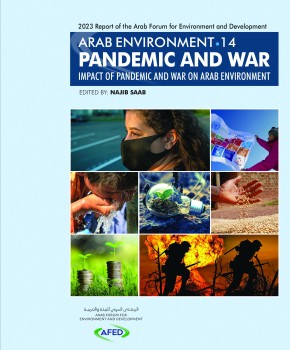
Impact of Pandemic and War on Arab Environment- The report is the fourteenth in the State of Arab Environment series launched by AFED in 2008.
Read More
Beirut, 29/05/2023
Impact of Pandemic and War on Arab Environment- The report is the fourteenth in the State of Arab Environment series launched by AFED in 2008.
Read MoreBeirut, 09/11/2020
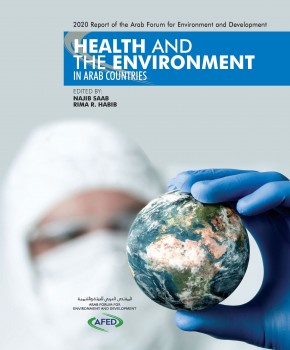
Health and the Environment in Arab Countries
Read MoreBeirut, 11/11/2019
The Arab Forum for Environment and Development (AFED) launched its annual report, Environmental Education in Arab Countries, at its 12th conference…
Read MoreBeirut, 11/01/2018
Financing Sustainable Development in Arab Countries is the eleventh in the series of annual reports produced by the Arab Forum for Environment…
Read MoreBeirut, 11/01/2017
ARAB ENVIRONMENT IN 10 YEARS crowns a decade of the series of annual reports produced by the Arab Forum for Environment and Development (AFED)…
Read MoreBeirut, 11/01/2016
This AFED report on "Sustainable Development in a Changing Arab Climate" recommends an alternative approach, based on integrating sustainable…
Read MoreBeirut, 11/01/2016
التنمية المستدامة في مناخ عربي متغيّر
Read MoreBeirut, 11/01/2015
Annual reports on the state of the Arab environment, produced since 2008 by the Arab Forum for Environment and Development (AFED), have become…
Read MoreBeirut, 11/01/2014
Food Security is the seventh in the series of annual reports on the state of Arab environment, produced by the Arab Forum for Environment and…
Read MoreBeirut, 11/01/2013
Sustainable Energy is the sixth in the series of annual reports produced by the Arab Forum for Environment and Development (AFED) on the state…
Read MoreBeirut, 11/01/2013
الطاقة المستدامة: التوقعات - التحديات - الخيارات
Read MoreBeirut, 11/11/2012
خيارات البقاء: البصمة البيئية في البلدان العربية
Read MoreBeirut, 11/01/2012
Survival Options-Ecological Footprint of Arab Countries is the Fifth in the series of annual reports produced by the Arab Forum for Environment…
Read MoreBeirut, 11/01/2011
Green Economy: Sustainable Transition in a Changing Arab World is the fourth of a series of annual reports produced by the Arab Forum for Environment…
Read MoreBeirut, 11/01/2011
Green economy in a changing Arab countries
Read MoreBeirut, 11/01/2010
Arab Environment: Water Sustainable Management of a Scarce Resource The Arab world is facing the prospect of severe water and food…
Read MoreBeirut, 11/01/2009
‘Impact of Climate Change on the Arab Countries' is the second of a series of annual reports produced by the Arab Forum for Environment and…
Read MoreBeirut, 10/01/2008
For the first time, a comprehensive independent expert report on Arab environment is released for public debate. Arab Environment: Future Challenges…
Read MoreParis, 03/07/2026
“The economics of climate adaptation: Investing in a resilient future” was the topic of this year's…
Beirut, 02/07/2026
AFED contributed a main chapter to the 14th report of the Arab Thought Foundation, under the title “Arab…
Beirut, 18/11/2025
The Arab Forum for Environment and Development (AFED) received with deep sorrow the news of the passing…
Beirut, 07/11/2025
“Green Passion from AUB to the world” was the title of a lecture delivered by AFED secretary general…
Cairo, 04/11/2025
Representing AFED at the Council meeting of the Observer Research Foundation (ORF) and the Cairo Forum,…
Amman, 25/10/2025
AFED Board of Trustees chairman Dr. Adnan Badran was honored as Man of the Year by the Shoman Foundation…
Dubai, 03/10/2025
The 11th World Green Economy Summit (WGES) convened in Dubai on 1-2 October 2025, under the theme ‘Innovating…
Corinth, Greece, 07/07/2025
The Steering Committee of the Mediterranean Commission for Sustainable Development (MCSD) met in Greece…
Abu Dhabi, 09/04/2025
Turning green urban spaces into sustainable investment opportunities was the topic of a session at the…
Riyadh, 20/02/2025
The Arab Forum for Environment and Development (AFED) participated in the Fourth Saudi Media Forum 2025…
Istanbul, 13/02/2025
The Mediterranean Commission on Sustainable Development (MCSD) met in Istanbul on 12-13 February to…
Istanbul, 27/01/2025
Secretary General Najib Saab coordinated AFED’s input to the Mediterranean Commission on Sustainable…
Beirut, 18/12/2024
AFED joined the Environment & Sustainable Development Unit of the American University of Beirut…
Athens, 19/04/2024
The Steering Committee of the Mediterranean Commission on Sustainable Development (MCSD) held its 23rd…
Berlin, 22/03/2024
The German Federal Foreign Office hosted the 10th edition of the Berlin Energy Transition Dialogue,…
Dubai, 14/02/2024
The International Advisory Group (IAG) presented its report on the role of artificial intelligence and…
Abu Dhabi, 01/02/2024
The Arab Forum for Environment and Development (AFED) participated in the 12th World Conference on Environmental…
Slovenia, 08/12/2023
COP 23, the 23rd Conference of Parties to Barcelona Convention for the Mediterranean, ended its meetings…
Dubai, 05/11/2023
The Mohammed bin Rashid School of Government in Dubai hosted the seventeenth scientific conference of…
Washington, 26/10/2023
Majid Jafar, member of AFED’s Board of Trustees and Executive Committee, was panelist at a conference…
Dubai, 26/09/2023
Arab Eco-Futures was the topic of AFED Secretary General Najib Saab’s speech at the opening of Climate…
Manama, 07/08/2023
Arabian Gulf University (AGU) mourned its President, Dr. Khalid Abdulrahman Al Ohali.Full news in Arabic
Florida, 10/07/2023
With profound grief and deep sorrow, the Arab Forum for Environment and Development (AFED) announced…
Marseille, 16/06/2023
The Arab Forum for Environment and Development (AFED) participated in the 20th session of the Mediterranean…
Kuwait, 29/05/2023
The Arab Forum for Environment and Development (AFED) presented its new report on Impact of Pandemic…
Kuwait, 23/12/2022
The Arab Energy Forum held its last annual meeting in Kuwait, to discuss the repercussions of the Russian…
Amman, 22/09/2022
As part of the Power Breakfast series organized by EDAMA, to debate climate and environmental challenges…
Beirut, 10/08/2022
Arab Forum for Environment and Development (AFED) announced that the new report in its annual series…
Beirut, 21/02/2022
AFED Secretariat presented its annual report to the Board of Trustees, with overview of 2021, covering…
Rome, 18/11/2021
Arab Forum for Environment and Development (AFED) received award of the Parliamentarian Assembly for…
Virtual Meeting, 12/11/2021
The International Advisory Committee charged with developing options for the seventh Global Environment…
WASHINGTON, D.C, 16/12/2020
Over 350 Organizations, Representing Hundreds of Millions of People in More Than 100 Countries on Board…
Beirut, 10/11/2020
AFED 13th Annual ConferenceAmerican University of Beirut, 10 November 2020 HEALTH AND THE ENVIRONMENT…
Beirut, 10/11/2020
The Arab Forum for Environment and Development (AFED) launched its 13th annual report, Health and the…
Beirut, 10/11/2020
Health and the Environment in Arab Countries Arab Forum for Development and Environment (AFED)Beirut…
Beirut, 10/11/2020
Arab Forum for Environment and DevelopmentAUB President Fadlo Khuri, MDNovember 10, 2020 Colleagues,…
Beirut, 10/11/2020
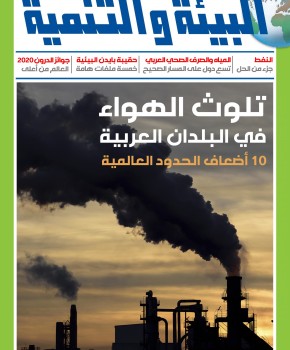
Issue 272 of the "Environment and Development" magazine was issued for the month of October 2020 and…
Beirut, 01/10/2020
Many epidemics and diseases can be prevented by managing environmental risks, which makes addressing…
Beirut, 30/09/2020
The State of Kuwait and the Arab world lost yesterday His Highness Sheikh Sabah Al-Ahmad Al-Jaber Al-Sabah,…
Beirut, 24/03/2020
On the occasion of Earth Day 50th anniversary, AFED participated in this year’s global online events…
, 24/06/2019
The Arab Forum for Environment and Development (AFED) announced that a team of leading scholars, working…
Riyadh, 30/03/2019
Green Growth Pathways for Saudi Arabia was the topic of a workshop, hosted at the iconic headquarters…
Beirut, 05/03/2019
Mr. Najib Saab, AFED secretary general, presented a speech at the regional meeting of ESCWA's Expert…
Beirut, 14/02/2019
Integrating environment and sustainability in the education systems was the topic of a meeting between…
Nairobi, 25/01/2019
The Intergovernmental Meeting on the Sixth Global Environment Outlook (GEO-6) Summary for Policy Makers…
Nairobi, 21/01/2019
The open-ended working group on Global Pact for the Environment, established by the UN General Assembly,…
The Arab Forum for Environment and Development (AFED) is a not-for-profit regional non-governmental organization, grouping experts together with the civil society, business community and media, to promote prudent environmental policies and programmes across the Arab region. While it maintains its character as a non-governmental organization, AFED admits, in the capacity of observers, national, regional and international bodies working in the fields of environment and sustainable development.
Read More